
Alexander the Great
| série: | Alexandre le Grand |
| éditeur: | Penguin |
| auteur: | Fox Robert Lane |
| classement: | biblio2A |
| année: | 1986 |
| format: | broché |
| état: | TBE |
| valeur: | 10 € |
| critère: | *** |
| remarques: | English book 1/ Philipp II, king of Macedon - marriage of his daughter and trivial affaires with Olympias, queen for 20 years when she was offset by Eurydice, new wife of Philipp - explanations about the crime of Pausanias, the bodyguard which seems to have been arranged on Olympias'responsability, Alexander and the persians are another speculation but not very serious - none of the books survived in its original and only one extract from a letter of Alexander is genuine beyond dispute 2/ search for Alexander - description of Macedonia (Lowlands and Highlands) - Alexander's rivals for the throne, background of intended marriage with Carian's daughter - Alexander's succession, affair with Amyntas executed by Alexander, murder of Attalus, alliance with Parmenion - physical description of Alexander 3/ biography of Alexander >> p. 45 Olympias' highly emotional character influenced Alexander - description of Alexander's companions (14 known but only in intimate clique of 7 or 8 formed his bodyguard, also possibly called Honoured Equals) - the relation with Aristotle was of immense value to Alexander, defense of Aristotle against critics of racism - liaison with Hephaistion, discussion about sex and homosexuality in Ancient Greece (rather a passion that a perversion) - Alexander's love for Homer's poems, espc. the Iliad, similarity between Achilles and Alexander - among the companions, success and achievement were the means to authority 4/ Alexander's army (quite an interesting chapter) - war among Greek states; what Philipp had intended was to stabilize the Greek states, but to his advantage - the force of Alexander: Philip's army - it was a standing (permanent) army, it was made possible thanks the financial backing of the gold mines and by freeing Macedonian soldiery from the bonds of the farmers' and foresters' calendar whereas harvesting was done by slave labour - the army had been technically equipped by a man from Thessaly, called Polyeidus - the cavalry, well-suited for Macedonia, was the punch-force but it needed to be disciplined (the wedge formation) >> p. 75 description of the Macedonian army and standard tactic in battle >> p. 76-78 the Foot companions and the Shield Bearers (who supported the Foot companions as complementary troops) n.b. Philip had hired Polyeidus of Thessaly who invented many siege machines including the twisted bow-string, the covered battering ram and a huge siege tower (Polyeidus’s pupil, Diades, was with Alexander at Tyre) 5/ Alexander's Greek campaigns - campaign to the Danube (Triballian), campaign against the Illyrian and finally the repression of Thebes 6/ situation in Greece before the Asia's expedition - common stability had been set up in Greece, the three traditional means of social upheaval (redistribution of land, freeing of slaves and abolition of debt) were under control - Athens only remained as a major Greek power (Thebes was broken and Sparta detested) - despite the few number of Greek soldiers, the expedition was called the "Greek crusade" >> p. 94/95 description of Callisthenes >> p. 99 description of the Persian court and of Darius III (incest in the Persian royal family) >> p. 100 the Persian army which was only in infantry at disadvantage (no heavy infantry except the 10'000 Immortals) >> p. 102 problems of logistic in Alexander's expedition (the royal road was of great importance to Alexander) 7/ crossing of the Dardanelles - background for the Persian fleet not having annoyed Alexander's ships (revolt in Egypt against Persia) - pilgrimage at Troya and hommage to Achilles 8/ war in Asia Minor - short descrption of the battle of Granicus >> p. 120/121 its origin, aftermath and implications - mention of the Spartan's omission "from a victory, above all, of the Greeks except the Spartans" 9/ the march to Caria - the freeing of the Asian Greek cities (Ionia) - Alexander's skill in besieging first mastered at Halicarnassus 10/ Gordium - flattery, true story or legend (probably all three together) derived from the chariot of the former kings of Phrygia - the curious story of Sisines, the Oriental spy 11/ Magi of the east - two first principles in the world according to Aristotle: - a good spirit (Zeus or Ahura Mazda) and - an evil spirit (Hades or Ahriman) - death of Memnon, forcing of the Cilician Gates, sickness of Alexander at Tarsus 12/ battle of Issus - victory of Alexander, mostly due to his formidable well-trained cavalry charging on the right and outflanking the Persian centre 13/ laborious siege of Tyre - description of siege equipment invented again by Polyeidus, the Thessalian - victory of Antigonus in the mainland of Cappadocia enabling to reduce Persian reinforcement which could have been a danger for Alexander's supply lines - siege of Gaza 14/ Egypt - Egypt was already 4,000 years old and it had been conquered 200 years ago by the Persians when Alexander arrived - Alexander was acclaimed as a pharaoh, during this conquest, it was also one of the strangest strand in Alexander's life: the quest for his personality and his parentage to Zeus-Ammon - visit to Siwah's oasis which was already well known to Greek culture and was recognized as the Delphi of the Greek East >> very detailed description of Siwah's rituals and the relation between Greek and Egyptian gods 15/ return to Phoenicia - where Alexander waited for his opponent Darius to raise a large army so that Alexander could defeat Darius formally and decisively in a pitched battle instead of marching against a vanishing enemy - preparations for the battle of Gaugameles, Alexander is still impressed by the overwhelming force of Darius and he is said, for the first and only known time in his life, to have killed a human victim in honour of fear (?) 16/ battle of Gaugameles - Alexander won one of his most memorable battles by pulling a decisive blow at a concise point, but Darius had escaped again 17/ the run after Darius - first experiment with naphta (oil) - description of Babylon, the richest state in Persia - conquest of Susa and Persepolis in the heart of Persia 18/ Persepolis - in Persepolis, Alexander found 120'000 talents, the biggest fortune in the world >> p. 261/262 the looting and burning of Persepolis 19/ pursuit of Darius - change in Alexander's character, the war was now a personal adventure and no longer a Greek revenge - description of the Persian people and customs (the conquerors who had assimilated their subjects'experience, espc. they accepted the integration with native people) - description of the Persian court, the affair with Bagoas, the eunuch >> p. 276 mention of the queen of the Amazons 20/ death of Parmenion >> p. 285/286 plot of Philotas and murder of Parmenion - the guilt of Philotas was not proved just because he did not advise Alexander, had he been involved in the plot, he would have acted otherwise but his enemies took advantage of this omission and Philotas was not not completely innocent anyway 21/ Bessus in Bactria - Bactrian campaign where Alexander showed his grandeur and leadership and why he could ask so much of his army - Alexander confronted with the Scythian horsemen and their war tactics as well as with Sogdian guerilla tactics 22/ Sogdian's campaign - fight against Spitamenes, Craterus is given the task to fortify the Merv western region which would decide the war >> p. 311-313 murder of Cleitus, reasons for the struggle and background: Cleitus downgraded by receiving the satrapy of Bactria because perhaps of personal reasons such as ageing or as being wounded but not for political reasons >> p. 312 wine is the mirror of the mind - an incident in Alexander's life due to his Homeric attitude - differences between Alexander and his father Philipp: the father made Alexander's successes possible but the successes were achieved by Alexander - siege of the Sogdian rock, Koh-i-Nor rock and wedding with Roxane - Alexander starts to engage native young people for military purposes 23/ the proskynesis - the prostration was in fact not recognized during the proskynesis which was an homage (greeting) rewarded to a nobleman with a kiss (or kissing) gesture - the kissing as a symbol of social status - the plot of the royal pages - Callisthenes' arrest and his mysterious death >> p. 329 much learning either helps a man greatly or harms him greatly; it helps the shrewd but harms the easy talker - one must know the proper and appropriate measure of all things, that is the definition of wisdom 24/ campaign of India - the march into India as a longing for curiosity and power, the army had by now been reorganized >> p. 337-338 description of the elephants as an army force, the dreadful fear of elephants (espc. from the horses) - greatest siege of Alexander at Pir-Sar (the peak of the holy man) - meeting with the Gymnosophists 25/ Porus - fight against Porus at the Hydaspes (Jhehum), perhaps the most brilliant and intelligent battle fought by Alexander 26/ Alexander's limits - Alexander starts to build a fleet, his first belief was that he was at the source of the river Nile, also events became to go wrong for Alexander - Alexander is confronted with the Indian monsoon and with major Indian kingdoms but far more he is confronted with a deep despair of the Macedonians not willing to continue after a march of about 12'000 miles and the bad weather had broken their spirit - the speech of Coenus after which Alexander admitted his defeat against his own troops - construction of the 12 altars at the river Chenab, Alexander's explorer dream was gone 27/ sailing towards the Ocean - Alexander decides to take the southern route down the Indus river - >> p. 379 Alexander's power of oratory, a gift he had so often observed in his father Philip - Alexander escapes death at the siege of Mullan but he is severely wounded - meeting with the tide of the Ocean and selection of Nearchus, the Cretan for leading the fleet to the gulf of Persia 28/ new expedition across the Gedrosian desert - Alexander wanted to rival Cyrus and Semiramis with this expedition - discovery of new spices (such as cinnamon = cannelle) - by marching the southern road, Alexander had chosen the most abominable route, but it was no evidence that the expedition had not carefully been prepared = 4 months journey - Alexander has reached his destination but the moral of his army was deep and after this failure (only 1/3 of his people survived), except for the fleet, rebellion was soon to spread out 29/ reorganization of the empire - contrary to what was expected, Alexander's empire, despite some revolts, did not fall apart during his expedition to India, however 14 of the 23 provinces showed signs of disturbance and revolt >> p. 411/412 the affair with Harpalus - the most misunderstood measure of Alexander's reign: he ordered exiles from his allied Greek cities to be restored home - the wedding of Susa 30/ Opis - the powerful speech of Opis, made by Alexander to his soldiers with which the handling of the mutiny was masterly done throughout - Alexander's policy of fusion between Asian and Greek people through the mixed culture of new blood and the ideals of spreading Greek culture - death of Hephaiston 31/ the last days - pomp (living on a stupendous scale) in Alexander's last days: Susa weddings, Opis banquet and the Hamadan + Babylon's feasts >> p. 437 the insurance against the loss of runaway slaves - Perdiccas is elevated as Chiliarch in replacement of Hephaiston - Alexander is worshipped as a god, in fact he had become the prototype of glory and superhuman excellence (leadership and invincibility) - plans of a next expedition against Arabia - funeral of Hephaiston - embassies from all over the world pay homage to Alexander 32/ death of Alexander possible causes of his death (hypothesis): - excessive drinking, as happened last at Medius' dinner but drinking had not been much heavier as before - plot with poisoning, originated by Antipater but the dose should have killed him instantaneously and Alexander would die 10 days after - sickness with fever (malaria) the third hypothesis is the most likely one but Alexander's death remains nevertheless a mystery "to the strongest" was his last word in respect of his succession 33/ the aftermath - the succession of Alexander was under a curse, three possible heirs: - Roxane's child (still pregnant) - Barsine's son (Herakles) - Philip's bastard son, a half-wit (Arrhidaeus) - Perdiccas with bodyguards and cavalry favoured Roxane's child, Meleager with foot companions still favoured Arrhidaeus, at least a Macedonian, the result was a bitter quarrel between the officers that ended with the death of Meleager - order had broken out, it was known as "the age of paradox" - Ptolemy seized Egypt, Antipater Macedonia, Antigonus Asia Minor, Seleucos Persia and Lysimachus Thracia - in Babylon, Roxane had poisoned Alexander's second wife Stateira, Roxane gave birth to a son: Alexander IV, Perdiccas lost his life in Egypt, Craterus fell in a battle against Eumenes, Porus was murdered by a Thracian, civil war was the consequence - Demosthenes in exile took poison - Aristotle was driven from Athens and ended his life on the island of Euboea, - Olympias clashed with Cassander and was killed by him - Cassander murdered afterwards Roxane and her son, - finally Ptolemy diverted Alexander's coffin to Alexandria where it was lost - the empire of Alexander fell within 30 years of his death, Seleucus' son Antiochus I founded the Seleucid's dynasty in Asia, Chandragupta in India annexed Alexander's possessions >> p. 487-489 the spreading of Greek culture and technical skill - Alexander = a man of various interests not only war, hunting and drinking >> a good book with the biography and analysis of Alexander with much evidence and details as well as explanations about the political, social and some economical backgrounds enclosures - cover of book - coins of Alexander the great (drachms and silver and gold tetradrachms) - a Macedonian gold crown |
| couvertures: | 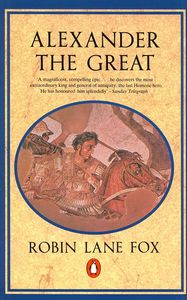     |
Copyright 2008 - 2026 G. Rudolf