
battle cry
| série: | Uris Leon |
| éditeur: | Granada |
| auteur: | Uris Léon |
| classement: | biblio2B |
| année: | 1979 |
| format: | broché |
| état: | TBE/N |
| valeur: | 5 € |
| critère: | * |
| remarques: | English book battle cry the sixth US Marine Corps at Guadalcanal and Tarawa battle cry is a 1953 novel by American writer Leon Uris, many of the events in the book are based on Uris's own World War II experience with the 6th Marine Regiment, the story is largely told in first person from the viewpoint of the Battalion communications chief, "Mac," although it fit frequently shifts to third person in scenes where Mac is not personally present the characters in the book come from a variety of backgrounds and cover a broad range of American archetypes, the interaction of the characters as they learn to put aside their prejudices and biases to bond, developing esprit de corps, is a primary theme of the novel (about 30 characters) the text is written in direct mode with raw, immediate material injections delivered (whom, blam, swhoosh blom, thump, etc) the book tells the story of how this diverse group came together to form an effective team as well as describing the battles they fought in, including the battle of Guadalcanal, Tarawa and the battle of Saipan, also described are their boot camp experiences in San Diego and their two assignments to US Marine camps in New Zealand, the first time for preparatory training for the battle of Guadalcanal and then back again for rest and recovery before the Tarawa campaign, their experiences in New Zealand reveal the very different cultures of the two allies and how much the young marines enjoyed the hospitality of the local people, in spite of being what has been called a "friendly invasion" this is the story of a private soldier (Danny Forrester) part of the sixth regiment of a US marine corps and their famous battle cries we will live and die with men like Andy Hoookans, Max Shapiro, Spanish Joe, etc from enlistments as young men through training until the bloody Pacific battles >> p. 50 the program of a routine day in a military training, centre (firing drills, physical exercises, etc) >> p. 182 the life and confort on a transport ship boarding in New Zealand as the next station >> p. 209 the hand-to-hand combat training >> p. 232 the camdiv combining army and navy division >> p. 238 GUADALCANAL 19.1.1942 the landing of the 6th regiment - 2nd and 8th marines coming back from battlefront, they were kids but now they were old men - the conditions of the 6th marine in their own holes, they did not see any Jap so far, their next objective was the Kokumbona river - fighting not only the Japs but the mud, the mosquitoes, fever, malaria and dysentery - finally on 19.2.1944 the 6th marine was disengaged - they had lived like pigs and after Guadalcanal, it was never quite the same and they knew there was more to come >> p. 369 TARAWA 20.11.1943 in the Gilbert islands - landing on the Blue beach, fifteen yards (14 mètres) of sand from the water to the seawall - to go over the wall meant instant death, on the Blue beach the stench of death was everywhere and the sector was littered with wounded - next objective was the small island of Karen >> p. 399 the equipment of a marine: two canteens of water, a first aid kit, a machete, a G.I. knife, a trenching shovel, a poncho, a compass, two hundred rounds of ammunition and four grenades, additionnally a radio which was switched every fifteen minutes >> p. 430 enemy contacted and destroyed on Cora island, Japanese casualties: 423 dead, wounded none, captured none US casualties: 98 dead, 213 wounded Tarawa atoll is secured. battle of Saipan (Marianne islands) from 16. to 9.7.1944 landing on Garapan island, Red beach one the good job of the seabees >> p. 469 the amputation above the knee >>> the novel is not very interesting to read and the three battles are underdeveloped, however based on Uris' own wartime experiences as a marine radioman but unconventional approach to character development enclosures - various book covers - guadalcanal map - us marines - pennant US marines - marine officer with natives - landing operation - tank operation Information the 1953 novel Battle Cry was written by American author Leon Uris (1924-2003), Uris was a U.S. Marine Corps veteran who served in the Pacific Theater (including Guadalcanal and Tarawa) during World War II, battle cry is a semi-autobiographical war novel detailing the lives, training, and combat experiences of a group of young U.S. marines, Uris also wrote the screenplay for the 1955 film adaptation |
| couvertures: |  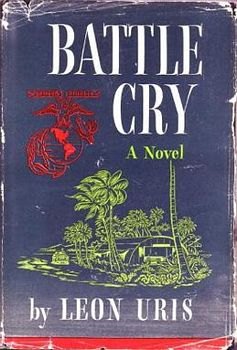 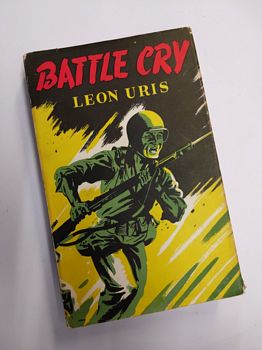 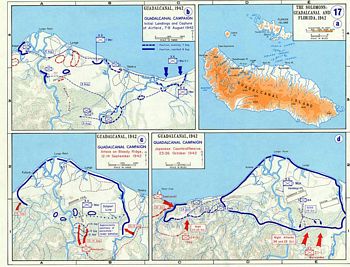 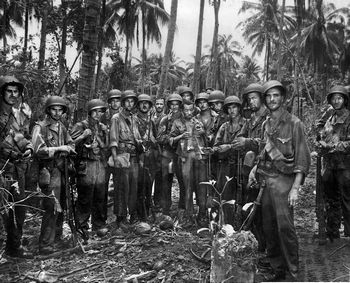 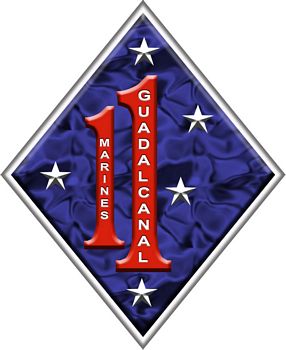 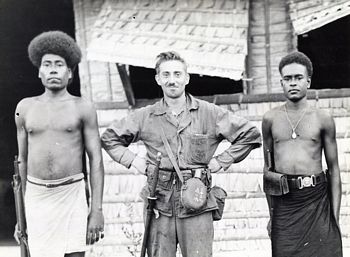 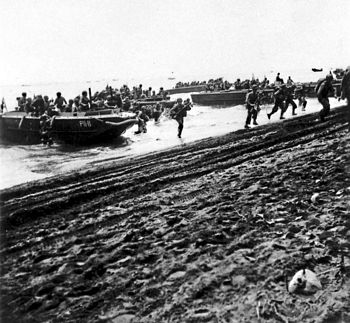 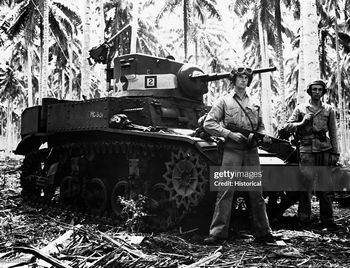 |
Copyright 2008 - 2026 G. Rudolf