
conquest and empire
| série: | Alexandre le Grand |
| éditeur: | Cambridge |
| auteur: | Bosworth A.B. |
| classement: | biblio501 |
| année: | 1988 |
| format: | cartonné avec jaquette |
| état: | TBE |
| valeur: | 15 € |
| critère: | * |
| remarques: | English book A) Prologue 1/ Macedon's unity was achieved by Philip (359-333 BC), creator of a modern army, taking use of material sources and alliances, all this benefited to Alexander's accession Philip reigned as an autocrat Thessaly and Thrace were annexed by force and became Philip's allies Alexander the Great became remarkably powerful by inheriting a highly trained, veteran military from his father, Philip II, he amplified this with his own tactical genius, pioneering the deadly "hammer and anvil" maneuver, leading fearlessly from the front lines, and astutely adopting the customs and administrative systems of the lands he conquered by the end of 340 BC, Macedon had become a super power among the four most important Greek states (Argos, Athens, Sparta and Thebes) at that time, the weakness of the Persian empire was evident, this due to internal struggling in the succession of the throne 2/ the young Alexander (356-323 BC and from 336 BC to his death at the age of 33 years king of Macedonia and of Asia his attitude in reigning was similar to that of Philip, the ruler had changed but the rule was the same, Alexander's intellect was however sharper B) the gaining of an empire (336-323 BC) 1/ the accession backed by Antipater, Alexander was succesful in his accession to the Macedon throne 2/ consolidation in Europe mostly against the Triballian people in the north of the Danube as well as against the Illyrians on the west side and the Thebes city in Greece, rapidity in movement had become Alexander's hallmark 3/ first victory the Granicus battle (spring 334 BC) 4/ the Aegean coast (summer 334 BC) Sardes - Ephesus- Miletus, siege of Halicarnassus 5/ from Halicarnassus to Cilicia (autumn 334 to summer 333 BC) n.b. apotropaic is an adjective describing objects, symbols, or rituals believed to have the power to protect against evil, bad luck, or malevolent spirits, it essentially means "safeguarding against evil" 6/ the campaign of Issus (333 BC) where the Persian army was destroyed 7/ the conquest of the Syrian coast (332 BC) - Byblos and Sidon surrendered, but Alexander had to make the siege of Tyre, it was to be prodigious (remarkable) - after 7 months of fighting, Tyre had also to submit, then it was the turn of the fortress of Gaza after 2 months of siege 8/ the occupation of Egypt (332/331 BC) - Egypt was taken bloodlessly and the welcome was quite impressive - visit of the sanctuary of Amon at Siwah where Alexander was considered as the son of Zeus - the city of Alexandria was founded 9/ the campaign of Gaugamela (september 331 BC) - Darius had chosen his ground to make maximum use of the cavalry and the war chariots - but again Alexander with his skill took the advantage although much outnumbered, Alexander was proclaimed king of Asia 10/ Babylon and Persis (winter 331 BC) - in Babylon Alexander was welcomed as a liberator, then the next city was Susa - the treasure captured here was massive and there was a superabundance of money - next target was Persis, the heartland of the Persian empire and despite the short resistance of Ariobarzanes, Alexander entered Persepolis (april 330 BC) >> p. 93 the fate of the Persepolis palace (an act of revenge for Athens' destruction) 11/ the occupation of Eastern Iran - withdrawal and death of Darius assassinated by the satrap Bessus - Alexander reached Ecbatana and tried to overhaul Darius - it was the end of an epoch with Alexander being without rival and the war of vengeance should now be completed - nearly all satraps submitted to Alexander except Bessus who laid claim to the Achaemenid throne 12/ conspiracy and intrigue: the downfall of Philotas - execution of Philotas and assassination of Parmenion due to a plot against Alexander's life - the army as well as their commanders were reorganized and Alexander would allow no criticism to his policies any longer 13/ the conquest of the North-east frontier - this conquest lasted two years - the hunt for Bessus continued in Bactria and finally he was surrendered by his companions to Alexander - rebellion of Spitamenes which caused great problems to Alexander, however Sogdiana and Bactria were now pacified - attack of the rock fortress (summer 328 BC) - Alexander took his first wife Rhoxane, daughter of the satrap Oxyartes, it was the final act in the process of this conquest - the affairs of Cleitus's murder as well as the proskynesis (prostrate, se prosterner), the pages' conspiration in which Callisthenes was involved and arrested 14/ the advance to India - spring 327 BC, the army was ready to begin the invasion of India - the invasion forces were divided in two columns - siege of Massaga and of the mountain fortress of Aornus - Macedonian siege engineering was quite efficient confirming their pre-eminence in military technology - in spring 326 BC, Alexander reached the Indus 15/ the campaign of the Hydaspes (may 325 BC) - arrival in Taxila (Islamabad) where Alexander receives 30 elephants - conflict with the dynast (= ruler of a family dynasty) Porus who waited with his army on the river side of the Hydaspes - Calanus, the Brahman sage is recruited - total victory on Porus' troops, it was probably the most brilliant tactic of Alexander 16/ from the Hydaspes to the Southern ocean - it was now monsoon weather, a huge fleet was built to drive south the Indus, but first Alexander would cross the Hydraotes and make siege of the city of Sangala (Lahore) - Porus became Alexander's best ally in the military operations - however a further conquest to the east was not to be continued as the Macedonian army refused to follow Alexander - last battle against the Malli during which Alexander was severely wounded 17/ the march through Gedrosia (July 325 BC) - the retreat was to be a double journey, one by sea under the command of Nearchus, one by land with Alexander - the territory traversed was notoriously desert, after 60 days the army arrived at Pura 18/ from Carmania to Susa - at his arrival, Alexander had to reorganize the whole army and administration >> p. 151 the report of Nearchus' sailing, 1500 km in 60 days with only one vessel lost >> p. 152 Alexander's grievance against Carthage >> p. 154 the tomb robbery of Cyrus - Susa was reached March 324 BC >> p. 156 the mariage ceremony, Alexander took the eldest daughter of Darius III and the youngest daughter of Artaxerxes III 19/ the final year >> p. 160 the discarding of the veterans at Opis - the death of Hephaestion came as a profound shock, Alexander projected an immense funerary monument - death of Alexander by fever on 10.6.323 BC at the age of 33 years, rumours of poisoning but death was probably due to malaria C/ epilogue: the shape of things to come - Alexander's death led inevitably to the dismemberment of his empire - Rhoxane and his son Alexander were murdered - the conquests of Alexander were effectively divided into separate power blocks with Antipater and his son Cassander (Macedon), Ptolemy (Egypt), Antigonus and his son Demetrius (Minor Asia) and Seleucos (Persia, Babylon) - few of Alexander's men returned home, the majority remaining in Asia, the manpower of Macedon accordingly declined - Alexander remained a symbol most notably in Egypt where his corpse lay in a special mausoleum (the sema) D/ mainland Greece in Alexander's reign 1/ Alexander and the Corinthian League - with the battle of Chaerona, the freedom of Greece was buried and it was the hegemon of Philip - after Philip's death, there was some agitation in Greece but soon Alexander took action to restore the Corinthian league and became the leader of the expedition against Persia - destruction of Thebes and interventions of Demosthene 2/ Agis III of Sparta and the war for Megalopolis - Sparta was the only city not to be included in the league and therefore Sparta would have no part in the war of revenge - expedition of Sparta towards Creta - defeat of Sparta against Antipater during the siege of Megalopolis 3/ Athens under the administration of Lycurgus n.b. Athens under the administration of Lycurgus (ca. 338–326 BC) was defined by a remarkable era of financial reform, civic renewal, and cultural revival following the city’s devastating military defeat by Macedon at Chaeronea, n.b. he should not be confused with the quasi-mythological Spartan lawgiver of the same name - the wealth of Athens was due to the positive administration of the Eteobutad aristocrat Lycurgus for 12 years - the increase of revenues was generated mainly from commerce and from the protection of their vessels from piracy - the main part of the revenues were to improve Athen's military preparedness (400 triremes ready for action) - Athens stayed clear of war for 15 years and her military capacity increased as a result - during that time Demosthenes was sucessful in his exploitation of the contempory feelings of frustrated patriotism 4/ the exile's decree and its effects - restoration of exiles by Alexander throughout the Greek world guaranteing return to all but those guilty of sacrilege (profaning temples) - however the decree was not much activated as Alexander died only 10 months after the decree was promulgated and afterwards the decree was mostly reversed E/ Alexander and his empire 1/ satrapal government - from the beginning, Alexander acted not as a conqueror but as the proper heir of the Achaemenids - the native satrap was often confirmed in his position for the civil administrations under the supervision of a Macedonian commander who had the true power - Egypt presented less of a problem, two natives were entrusted with the civil administration having the title of nomarch, surveyed by two Macedonian generals in Pelisium and Memphis - the most interesting figure in Egypt was Cleomenes in charge of the entire fiscal system as well as in charge of the building of Alexandria - the key factor was loyalty 2/ financial administration - in general Alexander accepted the Achaemenid fiscal system as he found it - the financial heartland of the empire were the royal capitals: Babylon, Susa, Ecbatana and Persepolis >> p. 243 the insurance scheme for the slaves of the royal army to recover escapees or to reimburse their value - the permanent memorial of Alexander's finances was his coinage (the famous tetradrachms) 3/ the new foundations - Alexander's reputation as a founder of cities is unsurpassed (about 70 according to Plutarch) - Alexandropolis was the first and it lasted for nearly 10 years - the most famous ones were Alexandria of Egypt, Alexandria of Caucasus in the Hindu Kush and Alexandria Eschate north of the Oxus 4/ the Greek cities in Asia Minor - in the process of liberation, these cities were an anomaly within the administrative structure as they could not be given the same treatment as Alexander's barbarian subjects - these Greek cities received a restricted democracy (the demos) - Sardes was the strongest fortress in Asia Minor F/ Alexander and his army 1/ the invasion army of 334 BC consisted of about 40'000 foot and 5000 horses - the phalanx division (taxeis) and the foot companions (pezhetairoi) were two main army corps but the major componant of the infantry were the hypaspists - the horse companions were the hetairoi with a short thrusting lance - however the sarisa was the basic weapon 2/ evolution and reorganisation - except of Gaugamela, all Alexander's victories were won with only a fraction of the force at his disposal - it is unlikely that the mortality rate was less than 50% given the constant fighting and the vigour of the physical condition encountered n.b. although the average life expectancy was around 30, that was skewed by high infant mortality, so if you reached 10 you could expect to make it to 40-50, and if you reached adulthood you'd have a good chance of surviving to 60 or 70. Parmenion was 70 as well - after 330 BC, the active Macedonian cavalry had been reorganised, the other correction was the apparent disappearance of the prodromoi (light cavalrymen) - after the execution of Philotas, Alexander refused to appoint a new commander for the entire cavalry body, but divided the companions between Cleitus, the veteran commander and Hephaestion, his closest personal friend - no such reorganisation was achieved for the phalanx infantry, the mass of which was now Persians armed with bows and missile javelins 3/ the use of oriental troops - Alexander relied on the Macedonian nucleus for front-line work and the mercenaries for support functions, the non-macedonian cavalry consisted mainly of Thessalian and Thracian cavalrymen - the character of the army had changed, the Macedonians did no longer enjoy supremacy over the other units of the army 4/ the structure of command - the lochoi were the officers of the infantry, Parmenion was second-in-command taking usually the left wing in the major battles - the cavalry command became much mor important and the sole uniting factor was the person of the king G/ the divinity of Alexander - the divinity in Alexander could have been his origin from his ancestors like Heracles or Achilles, but also as his worship being son of Zeus or Amon - the consultation of the oracle in Siwah made a profound and lasting impression upon Alexander - let him be a god if he wishes this dixit Demosthenes - the gods by definition were ageless and deathless, the hero cult provided a half-way house, the heroes being superhuman - achievement may bring a man close to the divinity and men could become gods by a surpassing display of excellence - the earliest case to be worshipped as a god would be that of Lysander >> p. 284 discussion about the proskynesis (act of homage) and Greeks felt repugnance to prostrate to any human H/ ancient sources - the most influential of the earlier historians of Alexander was probably Cleitarchus of Alexandria being the ultimate source of the common tradition n.b. Cleitarchus was one of the historians of Alexander, son of the historian Dinon of Colophon, he spent a considerable time at the court of Ptolemy Lagus, he was active in the mid to late 4th century BC, his work, the History of Alexander, is almost completely lost and has survived only in some thirty fragments preserved by ancient authors, especially by Aelian and Strabo further ancient authors were: Arrian, Strabo, Plutarch, Curtius Rufus, Diodorus Siculus and Justinius Plutarch intended to draw parallels between great figures of Greek antiquity and Romans of his own time >>> this book is relatively interesting in the first half representing a summary of Alexander's life and conquest but afterwards the reading becomes somehow arduous due to the various thematic studies with a lack of maps and illustrations, hereafter some of the thematic studies presented by Bosworth: - Alexander and the Iranians - the Indian satrapies under Alexander - the government of Syria under Alexander Information - Alexander the Great's historically recorded last words are famously "to the strongest", he spoke this phrase in Babylon in 323 BC when his generals asked him who should inherit his vast empire, fully aware it would spark violent power struggles after his death - there were subsequent visits to the tomb by numerous Roman emperors and then, beginning in A.D. 360, a series of events that included warfare, riots, an earthquake, and a tsunami, threatened or perhaps destroyed the tomb by the time of Chrysostom's visit, from that point on, Alexander's tomb can be considered lost - Napoleon Bonaparte deeply admired Alexander the Great, ranking him as the best military commander in history, he famously stated: "I place Alexander in the first rank... for the conception, and above all, for the execution of his campaign in Asia historian A.B. Bosworth portrays Alexander the Great as a brilliant, but deeply ruthless and megalomaniacal conqueror, while acknowledging his unparalleled tactical genius, Bosworth’s scholarship emphasizes the destructive nature of Alexander’s campaigns, his paranoia, and the instability of the vast empire he forged this book is an exploration of the process and consequences of the campaigns of Alexander the Great of Macedon (who reigned from 336 to 323 BC), focusing on the effect of his monarchy upon the world of his day. A detailed running narrative of the actual campaigns from the Danube to the Indus is complemented and enlarged upon by thematic studies on the reaction in Greece to Macedonian suzerainty, the administration of the empire, the evolution of the Macedonian army and its role as the instrument of conquest, and on the origins of the ruler cult. vocabulary - fiat = authoritative or arbitrary order, decree or dictate issued by someone with complete power - faix = most commonly refers to a French literary term for a burden, load, or heavy package - Eteobutad = Butadae or Boutadai, Eteobutadae, who possessed some hereditary priestly positions, claimed the lineage of this hero and were originally called Butadae - the Lamian War (323–322 BC) was an unsuccessful rebellion by Athens and a coalition of Greek city-states to break Macedonian hegemony following the death of Alexander, it culminated in a Macedonian victory at the Battle of Crannon, marking the end of Athens' role as an independent military power - prosopography is the study of a group of people through the collective examination of their shared characteristics, backgrounds, and careers - Lysander (454-395 BC) was a Spartan commander and statesman who was one of the leading military and political leaders of Sparta during the Peloponnesian wars, he destroyed the Athenian fleet at the Battle of Aegospotami in 405 BC, forcing Athens to capitulate and bringing the Peloponnesian wars to an end, he then played a key role in Sparta's domination of Greece for the next decade until his death at the Battle of Haliartus, Lysander's vision for Sparta differed from most Spartans; he wanted to overthrow the Athenian Empire and replace it with Spartan hegemony |
| couvertures: |  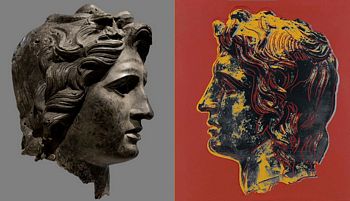 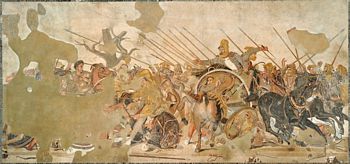 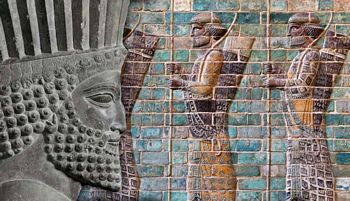 |
Copyright 2008 - 2026 G. Rudolf