
Alexander
| série: | Alexandre le Grand |
| éditeur: | Greenhills Books |
| auteur: | Dodge Theodore |
| classement: | biblio506 |
| année: | 1994 |
| format: | cartonné, avec jaquette |
| état: | TBE/N |
| valeur: | 20 € |
| critère: | * |
| remarques: | English book the meteoric career of Alexander as a man of imagination, his great practical statesmanship and military genius is vividly reconstructed in Dodge's narrative with many maps, original charts and pictures although these illustrations are of rough drafts - of the ancient author, Arrian, a talented military man, is the most reliable and his work "Anabasis" the most valuable history - the other ancient authors are: Quintus Curtius, Diodorus Siculus of Sicily, Plutarch, Strabo and Polybius - the art of war - the author refers mainly to Napoleon military aspects, Hannibal being the subject of a separate book of Dodge 1/ Alexander - the earliest histories are but a record or wars - strategy was described as the art of making war upon the map (political objectives, military resources and actions) being the sense of whereas the tactics is battlefield manoeuvring - strategos = military leader, general - together with strategy and tactics are the logistics and engineering 2/ early history of war - the first reliable history of waar is found in the Bible and afterwards in the Iliad by Homer (1200 BC) - so long as man existed on the earth, he has been a fighting animal - the art of sieges to storm fortresses 3/ early Oriental armies - Assyrians, Babylonians and Medes - infantry constituted the bulk whereas the cavalry was the flower - the drill and discipline of te Jewish army was considerable - the egyptian pharaon Sesostris was alleged to have conquered territories as far as the Oxus and Indus n.b. in Herodotus' histories there appears a story told by Egyptian priests about a Pharaoh Sesostris (about 2000 BC) who once led an army northward overland to Asia Minor, then fought his way westward until he crossed into Europe, where he defeated the Scythians and Thracians (possibly in modern Romania and Bulgaria), according to Herodotus, Sesostris was the only Egyptian king to rule Ethiopia - Cyrus the great was an influent conqueror, in his army, military service lasted up to 40 years of age 4/ early Greek armies and wars - every freeman was a soldier and was trained accordingly - for the infantry, in front were the least brave, in the rear the most brave - the hoplites were formed in a dense body called phalanx - Sparta and Athens were distinguished for the perfection of their military organisation - for Sparta war was the only art - the Spartans never opened a campaign before the full moon, this was a religious custom - Athens was a kind of democracy but effectively on the rich citizen would rule the city-state - Athens had a famous fleet, Sparta had no fleet >> p. 40 description of an hoplite 5/ Cyrus and Darius - before these conquerors, there was no military science to the art of war - Cyrus (559-530 BC) originated from the family of the Achaemides, he united Persia and Media by submitting also Croesus, king of Asia Minor (battle of Thrymba) - later on, Cyrus extended his conquests to the Scythians east of the Caspian sea - Darius (521-485 BC) consolidated the Persian empire, he made war again to the Scythians but without great success 6/ armies in the fifth century BC - Darius divided his empire into 20 satrapies, notable satrapies were Babylon and Assyria, Egypt, Lydia, Bactria and India, the corps d'élite were the Immortals, the most effective part of the Asiatic armies was the cavalry, mostly Median and Parthian the best of the Greek population embraced arms as a profession, mostly in form of mercenaries for various kings or states a corps d'élite in Thebes was the sacred band or band of lovers the phalanx had proven a good formation and was continuously improved with the sarisa (pike) as main offensive weapon and the psiloi (shield) as defensive weapon - the peltasts (light foot) were generally on the flanks of the army (or in front) >> p. 69 the formation of the phalanx (one wing strengthened) was created by Epaminondas, that was an advance in battle tactics - often the cities were fortified with citadels, in Athen: the Acropolis, in Thebes: the Cadmae - the instruments of siege: mainly the catapult with arrows and the ballista with stones - Themistocles was the founder of the Athenian navy (400 triremes) 7/ Miltiades - Marathon (490 BC) - first pitched battle was in Marathon led by Miltiades with a tactical plan of battle, the Greeks were outnumbered but were more heavily armed, with an "esprit de corps" and more disciplined - the Greeks moved forward at a run taking the Persian army by surprise while strengthening their flanks and encircling the mass of Persians who were trying to push the Greek center which was retreating, thus annihilating the Persian army from 3 parts, the Persian army was destroyed - afterwards the Greek army marched steadily to Athen just in time to forestall capture of their city by the Persian fleet 8/ Brasidas (424-422 BC) the Peloponnesian war with Brasidas, the Spartan and Pericles, the Athenian with the participation of Demosthenes in the battles - the retreat of Brasidas in good order from Illyria n.b. Brasidas was a Spartan general and statesman and is considered to be the most distinguished Spartan commander of the first decade of the Peloponnesian War, he died during the Second Battle of Amphipolis while winning one of his most spectacular victories 9/ Xenophon - Agesilaus (401-394 BC) - Cyrus the younger, second son of Darius II, started a dispute with his brother Artaxerxes - victory at the battle of Cunaxa but Cyrus was killed and the Greek mercenaries had to make their way out of the country under the command of Xenophon, a talented officer - that was a grandiose retreat to the science of rear-guard fighting known as the march of the ten thousand (401 BC) as told in the book Anabasis, out of the 13'000 only 6000 lived to see the Euxine (Black Sea), they had marched over 4000 miles during 14 months - Alexander had a predecessor in the invasion of Asia: Agesilaus, king of Sparta during the Sparta-Persian war 399-394 BC - after having routed the Persians in Asia Minor, Agesilaus took the way home through Thessalia and beat the Thebans at the battle of Coronaea (394 BC) 10/ Epaminondas (371-362 BC) - this great Theban leader stamped his name as one of the world's early tacticians, he invented the manoeuvre of the oblique order of battle instead of parallel order by strengthening deeper one wing of his army with a strong column of attack, it was a masterly conception produced by this oblique way of attack - first victory against Sparta at Leuctra (371 BC) with the sacred band under Pelopidas - victory again at Mantinae (362 BC) but Epaminondas was killed during the battle 11/ Philip and Macedon (359-336 BC) - Alexander I was (478 BC) a Persian vassal, Archelaus was the next king who raised his country's prosperity - several kings succeeded up to Philip II of Macedon (359 BC), he was invested to the throne at the age of 23, based on his experience, he reorganised the army by improving the phalanx, inclined to Greek culture, he created a kingdom extending from the Euxine to the Adriatic - among other wives, he married Olympias, daughter of the king of the Molossi, Alexander was born (July 356 BC), he was made regent at the age of 16 - Philip's claim to leadership in Greece, caused Thebans and Athenians to make war, but Philip won he batfle of Chaeronae (338 BC) where Alexanded aged 18 distinguished himself by throwing his cavalry in the left wing - afterwards Philip was elected hegemon (aucrator) of Greece - dispute of Alexander with Attalus and Philip who was murdered by Pausanias (336 BC) - Alexander took the throne, the Macedonians stood midway between the despot-ridden Persian and the free and equal Hellene 12/ Philip and his army (359-336 BC) - Alexander inherited much from his father, espc. concerning the shape of the army, the Macedonian military machine was far ahead of the rest of Greece the Macedonian phalanx will always remain in history as the ideal of shock tactics, it consisted of the hypaspists (shield-bearing) and pezetaeri (foot-companions) with the ageman (royal footguards) - the sarissa (main weapon) was about 6 m long held by both hands, only great individual strength and steady drill could render the phalangite able to execute the manoeuvres called for - the prelast was a light infantryman originated by Iphicrates of Athena (archers, slingers and darters) - the grand phalanx numbered about 30'000 men, commands were given by voice, trumpets or signals of a standard - Alexander employed more cavalry than any one up to his day and handled it better (hypparchy), as a rule the cavalry was on the flanks of the phalanx to protect the weak points - hetairai = horse-companions or brothers-in-arms, they were Alexander's right hand - the cavalryman had no stirrups (étrier) nor were the horses shod (ferré) - the artillery consisted of catapults (large arrows) and of ballista (stones of up to 30 kg) 13/ the art of fortification and sieges - Alexander gave to the art a marked impetus - first was the construction of a mound of earth or stones wih a gradual slant upwards towards the wall instead of mounds, towers with drawbridge were built as they would be more quickly constructed, they needed many men to operate them - mining and countermining were also carried on 14/ Alexander and Greece (336 BC) - Alexander's education was presided by Leonidas, Lysimachus and finally by Aristotle from whom he gained all that was wisest and best >> p. 182 description of Alexander and Bucephalus, his horse - but at his succession danger stared Alexander from north, east, west and south 15/ the Danube (335 BC) - final subjection of the savage tribes on his border, the Getae, Triballians and Thracians on the Danube, this river forming the best defense to his kingdom 16/ Pelium (335 BC) - having pacified the east, Alexander headed for the west against he Illyrians, the Autoriatians and the Taulautinians - battle for the strategic position of Pelium with the help of the Agrianians who were among the bravest and most efficient of the lightinfrantry troops - by ruse Alexander could dismantle his various adversaries, this was also the first record of the use of artillery in battle - the security of Macedon was now complete and Alexander was recognized being even a better general than his father 17/ Thebes (335 BC) - by distributing money, the Persians influenced the Greek cities to take up arms against Alexander - the Thebans supported by Athens revolted believing that Alexander was dead during his previous battles - with great determination and rapidity, Alexander reached Thebes in a fortnight and by refusing any compromise, the Thebans sealed their own doom, Thebes was destroyed and the population enslaved, whole Greece was now pacified in the first twelve months of Alexander's reign 18/ off to Asia (334 BC) - in his campaign, it was Alexander's habit to gather information with scrupulous care and he would gauge the exact value in a problem of one or two isolated facts - Alexander would not wait for his offensive until Persia would take defensive measures, Persia was now ripe for a fall (lack of homogeneity) - Memnon was a formidable opponent, but he was luckily not listened by the Persians - Alexander started to liberate the Greek Ionian colonies under the rule of Persia - with a force of about 30'000 foot and 5000 horse, Alexander crossed the Hellepont spring 334 BC >> p. 228 list of Alexander's commanders with Parmenio as general-in-chief - Alexander was Achilles come to life 19/ battle of Granicus (may 334 BC) - Alexander choose an immediate offensive with his right wing against the Persian cavalry (20'000 horse) making no use of their infantry - Persian target was to drive back and Macedon to win a footing on the other bank, but Alexander ran great personal risk in the combat - after the Persian line was broken, the whole Persian army collapsed and fled except for the Greek mercenaries - the Macedonian loss was less than 3% - it was a tactical although brave defeat for the Persians, thereafter no other Persian army was found to face Alexander in Asia Minor, the road to the heart of Persia was open, but Alexander had now to conquer the cities on the Aegean coast so that he could avoid any interference of the Persian fleet 20/ Sardis, Miletus, Halicarnassus fall (334 BC) - Sardis surrendered, Miletus did the same as well as the satrap of Lydia, then Alexander marched to Ephesus, queen of the Ionian cities, she also opened the gates - continuing his land blockade, Alexander reached Halicarnassus, the last Persian stronghold in the Aegean whose garrison under Memnon decided to resist - after some serious attacks, the city was conquered but the citadels remained with the support of the Persian fleet, but even so the west coast of Asia Minor was under control 21/ to the Taurus (winter 334/333 BC) - Alexander's plans now pointed towards the interior of Asia Minor - whereas a colum was heading directly to Gordium, Alexander advanced through Lycia, Pamphylia and Phrygia >> p. 274 the plot of Lyncestian Alexander - Alexander was always followed by good Fortune and he had by now rendered safe his base in Asia Minor 22/ Cilicia, summer and fall (333 BC) - Memnon was now supreme commander of the Aegean, he conquered some islands and planned to invade Macedon with his fleet, but he died shortly after and command was given to Pharnabazus who could not compete with Memnon's ability in warfare, that was part of the good fortune set in favour of Alexander >> p. 288 the episode with the Gordium knot - Alexander crossed now the Cilician Gates, why the Persians did not occupy the defile, remains a mystery (good fortune again?) - meanwhile Darius was setting up a large army to stop Alexander's advance who at least arrived in Tarsus where he fell sick 23/ Issus (november 333 BC) - Alexander waited for Darius in the narrow coast near Issus where Darius' army could not manoeuvre at its full extent, Alexander's fortune was the complement of Darius' folly - having passed the Amanic gates, Darius was now threatening Alexander's rear who was equally surprised of this new position - the plain at Issus was not more than a mile and a half wide, Darius had in mind to break into Parmenio's cavalry on the left side, reinforcement with the Thessalian cavalry was sent to Parmenio - the Greek right wing pushed into the Persian left centre at double-quick, threatening in a kind of oblique order the Greek mercenaries misplaced in the centre - on the left Parmenio succeeded in withstanding the assault of the Persian cavalry while on the right Alexander led his companions towards Darius centre who now took to flight, causing the dissolution of his army, Alexander had found the weak point of Darius' army and gained victory - the mortality rate was about 15%, medical attendance was inefficient 23/ Tyre (november 333 to august 332 BC) - before moving inland to Persia , Alexander made sure to neutralize all seacoast countries, he marched towards Phoenicia, he first occupied Byblus, Sidon opened her gates, Tyre would also submit but did not give the authorization to Alexander for entering the city, this could not be accepted by Alexander and the siege of Tyre began, it lasted seven months - Darius had so far no master-mind to oppose the ability of Alexander 24/ Gaza and Egypt (september 332 to spring 331 BC) - all Syria except Gaza had submitted, Gaza was a strong fortress commanded by the eunuch Batis, finally the fortress was conquered but Alexander was seriously wounded during this action - the Egyptians were a peaceful folk and the satrap Mazacès did not resist Alexander who entered Egypt nearly as a new pharaoh - Alexander chose the site of Alexandria to build a city which would become famous, on that occasion Alexander visited the oasis of Siwah with the temple of Jupiter Ammon 25/ on to Babylon (spring to september 331 BC) - within 10 days, Alexander reached the Euphrates where a huge army was set up by Darius, then Alexander took the route on the uplands of the Tigris >> p. 357 the total eclipse of the moon (september 20th) considered as a favourite omen by Aristander, the soothsayer - for Darius, a lost battle now meant a kingdom lost for good, for Alexander the final struggle for the mastery had yet to come - this time Darius had much a larger army than before, well armed but missing a good drilll and discipline >> p. 363 the composition of Darius'army hereof 200 Scythean chariots and 15 elephants for the first time, Darius' position was well chosen, large plain with ground carefully leveled 26/ Arbela (october 1st 331 BC) - the Persian army far overlapped the Macedonian flanks, so Alexander placed a rear reserve force at his two flanks in order not to be completely encircled by the enemy and to be able to face the danger in any direction - Alexander and his companions slowly advanced in oblique order until they discovered a gap in Darius' line caused by the overstretched advance of Persian cavalry - that was the weak point and Alexander immediately as always pushed his wedge in force into the breach aiming to Darius' centre whereas a furious battle was continuing with both cavalry forces - now as at Issus victory was to be snatched by boldness - Darius war directly threatened by Alexander and again took the flight causing then confusion in his army - the splendid wedge of the Macedonian right wing had won the battle - the rule to old battle is the same: the victors lose little, the vanquished are cut to pieces - a battle was not to be won by mere weight of masses but by striking at the right place and the right time 27/ Babylon, Susa, the Uxians (october to december 331 BC) - Darius retreated to Ecbatana whereas Alexander took possession of Babylon >> p. 389 description of Babylon - Alexander stayed one month in Babylon, then arrived in Susa where large treasures were found, next target was Persepolis through the Persian gates, the possession of a kingdom 28/ the Persian Gates (december 331 to march 330 BC) - next hindrance were the Susian gates held by the satrap Ariobarzanes, he was submitted by ruse and Persepolis as well as Passargadae were occupied >> p. 409 the burning of Persepolis' palace 29/ Darius (march-july 330 BC) - 500 miles of Persepolis Darius established himself in Ecbatana a marvellous city with her citadel being a treasury and the palace a marvel of beauty - during his pursuit of Darius, Alexander learned about Antipater's victory over the Lacedaemonians at Megalopolis - after Ecbatana Alexander reached Rhagae (now Teheran) - meanwhile a conspiration captured Darius who was finally put to death when Alexander was on the eve to rejoin the fugitives - Darius was about 50 and a brave man but a poor soldier, he lacked moral endurance and equipoise n.b. equipoise = state of perfect balance, equilibrium, or a counterbalance between opposing forces - but perhaps it was better for Alexander that Darius was dead, alive he might have been a constant rallying-point for malcontents and Alexander had now a perfect right to the Persian throne 30/ Bessus (july to fall 330 BC) - Bessus' intention was to become the new great king under the name of Artaxerxes, but his companions started to distrust each other whereas Alexander marched to Hyrcania - no conqueror ever understood how to attach ancient enemies to his own cause better than Alexander, not only Alexander won his battles but he won them at the cost of very few human losses >> p. 435 Alexander restrained the amount of baggage in his convoy - the pursuit of Bessus was continuing, he expected to get the aid of the Scythians, Alexander's route was now from the Caspian to the Caucasus and arrived now at Herat (now Afghanistan) through Drangiana up to Bactriana - after having secured his rear bases, Alexander could now advance into the Parapamisus (Hindu-Kush) 31/ Philotas fall (330 BC) - this incident makes one of the saddest stories of Alexander's life, death of Philotas and Parmenio 32/ the Caucasus fall (330-may 329 BC) - Satirbarzanes having rebelled was killed in a short battle, Alexander entered now he Cophen valley (Kabul), at that time he ventured into a real terra incognita, there would be in these regions no pitched battles to fight - Alexander began also to incorporate Oriental soldiers in his army to reach Sogdiana, the army went through the Khawak pass and reached Maracanda (now Samarcand) the capital on the river Oxus - the companions of Bessus had revolted and seized him who was given to Alexander and executed 33/ the Jaxartes (summer 329 BC) - Alexander was now faced with multiple short battles against the Barbarians, espc. after having crossded the Jaxartes where he met with the Scythians there he found Alexandria ultima of Yaxartes - it followed the revolt of Spitamenes, one of the greatest advesaries of Alexander - Alexander won in a difficult position even more so as the Scythians were waiting to cross the river towards Alexander, but again Alexander surprised his enemies by changing his fighting methods - about 7 cities were stormed and occupied, afterwards he could turn to action against the Scythians, he made use of his artillery and of a special approach to intimidate the Scythians and after various skirmishes, Alexander was successful and arranged a peace treaty with them 34/ Spitamenes (summer 329 to fall 328 BC) - the affair with the Scythians having been dealt with, Alexander turned to Spitamenes who was betrayed by his companions and whose head was delivered to Alexander >> p. 479 defeat of Andromachus against Spitamenes >> p. 485 the amazons are mentioned >> p. 491 Amyntas did retire, he was 97 years old - the Persian habit was now constantly on the increase with Alexander 35/ Clitus (winter 329-328 BC) - Clitus was one of the most distinguished Macedonian leaders and it was very sad indeed that he was involved in a dispute with Alexander concerning the prostration, this mostly due to overdrinking - the bulk of the Macedonians held this practice in abhorrence 36/ Roxana (winter 328-327) -arrangement looking to an Indian campaign were seriously begun - Bactria and Sogdiana were quiet, only some strongholds like the Sogdian rock remain untouched, this rock was commanded by Oxyartes and Alexander decided to storm this fortress with the support of expert climbers presenting those as "winged soldiers" - after the battle Alexander took Roxana, daughter of Oxyartes, as his wife - a further target was the rock of Chorienes >> p. 507 the change of the Macedonian army 37/ the Cophen country (may 327 to winter) - on the way to India only Bacchus and Hercules had preceded Alexander, beyond the Indus, no king from the west had yet penetrated the territory, it is said that the Indian kings Taxiles and Sisicottus have asked Alexander for help against Porus, lord of the region - Alexander's army now numbered 120'000 foot and 20'000 horse, but it was no longer a Hellenic army - the way down to India was to go through the Khyber pass towards Peshawar >> p. 522 battle for Massaga, the capital of the Assacenians n.b. ichor = blood of the gods = ambroisie = nectar 38/ rock of Aornus (late winter 326 BC) - it was a spot higher than the flight of birds - in this fortress, the barbarians felt very secure, but narrow secret footpaths enabled Alexander to trick the enemies and attack them in the rear - the first assault failed and it was decided to make a mound across the ravine so as to bring the artillery against the wall of the fortress and after 7 day of bitter fight, Alexander captured the inexpugnable rock of Aornus against which even Hercules had recoiled - after a month's rest, the army was ready to cross the Indus - in Taxila Alexander was received with great splendor together with Abisares of Cashmir although this one later on betrayed Alexander, then the whole army moved towards the Hydaspes 39/ Porus (march to may 326 BC) - the rain season had just set in - Porus's army (50'000 foot, 3'000 horse, 1000 chariots and 150 elephants) waited on the other bank of the river for Alexander - as to Alexander from mountain fighting, he was now getting back to level plains and pitched battles - first Alexander had his troops moving along the bank making great noise and mouvement, confusing and exhausting Porus' troops - second Alexander made secret preparation to cross the river seventeen miles up the stream from his camp and by doing so, he was able to surprise Porus - not being sure that the main force of Alexander had crossed the river, Porus sent a portion of his army towards Alexander, however Porus underestimated Alexander's forces and this first army was totally destroyed 40/ battle of the Hydaspes (may 326 BC) >> p. 554 description of Porus chariots containing up to six armed men - the danger for Alexander was the elephants, against them the horses would not stand, therefore while facing the elephants with the phalanx, Alexander arranged some manoeuvres with his cavalry on the flanks of Porus' army - the result of the battle remained uncertain, but the phalanx was able to face and repel the elephants which caused disorder in Porus' lines n.b. while Porus took a defensive tactic, Alexander had the choice of when and where he should attack and he was able to bring his cavalry in the rear of Porus' army completely dismantling his enemy - this defensive attitude of Porus was Alexander's salvation - Porus had no conception of grand tactic, espc. in the manoeuvring of this troops - the battle had lasted eight hours and had be won by clean, crisp tactical skill as well as the wonderful use of the cavalry arm - Porus himself was captured, but was at the same time he was admired by Alexander for Porus did not take the flight during the battle but kept us the struggle and later on he became Alexander's most faifhful ally 41/ the five rivers (may to july 326 BC) - death of Bucephalus whose name was given to a city - campaign against the Glaucians, afterwards a large fleet was built in order to sail down the Indus - Alexander reached now the river Hydraotis, and the butcherous battle of Sangala - at this stage Alexander himself was insatiable but the spirit of his Macedonians had begun to flag 42/ turning back (july-october 326 BC) - the army refused to be led farther from home and their rights now cause to be exerted not to advance beyond the Hyphasis >> p. 581 the complaint of the brave Coenus - by means of a sacrifice to the gods, the advance was declared unprofitious and to commemorate the event twelve altars were erected - about 1000 vessels went now down the Indus under the command of Nearchus 43/ the Mallians (november 326-february 325 BC) - at the junction of the Hydraotis and the Acesines was to begin the bitter fight against the Mallians - it was a war of extermination but during an assault on the fortress Alexander remained alone with some companions and was badly wounded, it lasted quite a long time until he was fully rehabilitated 44/ Gedrosia (february 325-february 324 BC) - Alexander was now entering the province of modern Sindh (Pakistan), all the population down the Indus were submitted without great fighting in fear of Alexander's apparently superhuman successes - arrival at Patala (Karachi) where Alexander was astonished at the phenomenon of the tides - having reached the delta of the Indus, it was now Alexander's intention to cross the desert of Gedrosia never traversed by an army whereas Craterus with the main part of the army would take the road back through Drangiana and Ariana - Nearchus with the fleet would continue by sea along the coast up to the Persian gulf, the boldness of Nearchus' voyage is per se extraordinary >> p. 619 the conditions suffered by Nearchus during his journey - the number to cross the desert with Alexander amounted to 35'000 men, this was the only instance when Alexander failed to have a care to his rations >> p. 623 the reason why Alexander chose to cross this desert, open a new trade route? - it was a dangerous desert indeed, the sand was like the waves of the sea for tracklessness, Paura, the capital of Gedrosia was reached by only 25% of the troops after 60 days, Nearchus travelled also safely on the coast of Salmus and when joined, the whole army pursued their way together up to Susiana - it was however time that Alexander should return, in order to reorganize his administration which had been neglected during his absence 45/ mutiny (july 324 BC) - after many years of toil (labor) and hardship, the Macedonians would now see an end to their venturesome campaigns - Alexander arranged mass wedding between Macedonians and Asiatic women, he paid also all the debts of his soldiers - the new forces of his army were now the Epigony = the successors, - they were probably not more than 25'000 Macedonians left and Alexander wanted no longer any troubles as in Hyphasis, therefore he wanted to dismiss most of his veterans who felt their situation with grievance and their dissatisfaction broke out into the great mutiny of Opis >> p. 638 the great speech of Alexander to his veterans - finally a reconciliation took place and Alexander forgave all the Macedonians 46/ Babylon (august 324-june 323 BC) - it was part of Alexander's plan to visit all parts of his kingdom and organize new campaigns beginning first with Arabia - but during a stay in Ecbatana, Hephaestion died and Alexander mourned greatly about this friend of the friends - Babylon became he new capital of the empire - but in June 323 Alexander developed a severe fever which finally took a fatal form - asked to whom he would leave his empire, Alexander replied: "to the most worthy" 47/ the man and soldier - Alexander was of uncommun beauty, among all he strictly observed his duties to the gods, he was active and able to endure heat and cold, hunger and thirst, trial and fatigue, he kept his body in good training - he actually enjoyed the delirium of battle, his judgement was all but infallible - his two best friends were Hephaestion and Craterus - he never asked an effort he himself did not make, but Alexander's temper grey ungovernable with a naturally excitable character, coupled with a certain superstitious tendency - words fail to describe the attributes of Alexander as a soldier - his life work was to conquest and then hellenize Asia - he was a great captain with a firm ability to rule men and commanding their love and admiration - he was compelled to study his every step forward, his fertility in ruse and stratagem was unbounded, his rapidity was unparalleled - it was his ability to seize openings with a rapidity perhaps never equaled which won him his battles rather than his mere battle plan 48/ the successors of Alexander, Eumenes, Antigonus and Philopoemen - Alexander's lieutnants divided his kingdom, but ambition and jealousies led to wars and the great empire fell to pieces - the generals called the Diadochi struggled one another and at the same time caused the entire family of Alexander to be extinguished - Greek and Macedon were no longer what they had been and preeminence had departed with their patriotism - it was this falling-off in discipline which eventually made Greece and Macedon a prey to the Roman arms some monarchies however remained: - Egypt with Ptolemy - Asia Minor with Antigonus - Syria and Asia with Seleucos - Alexander magnificent plans in the East had beeen shipwrecked, however a salvage of Hellenism remained to testify the conqueror's splendid projects - the Parthians and Indians soon had retaken the lands between the Euphrat and the Indus - the construction and machines of siege experienced a great development, espc. by Demetrius Poliorcetes - the battle of Ipsus (301 BC) was an important confrontation among the numerous clashes during the period of the diadochi >> p. 670 Eumenes' stratagem to abuse Antigonus - one last battle was the victory of Philopoem at Mantinae (206 BC), he was the last of the Greek strategos n.b. the battle of Mantinea was fought in 207 BC between the Spartans led by Machanidas and the Achaean League whose forces were led by Philopoemen, the Achaeans defeated the Spartans, in the battle, Philopoemen defeated and killed the Spartan ruler Machanidas in one-on-one combat appendix A) some ancient marches appendix B) losses in some ancient battles appendix C) marches of Alexander up to 22'000 miles in all appendix D) genealogy of Alexander enclosures - two covers of the book - Alexander's head - a hypapist as drawn by colonel Dodge >>>> Alexander: a history of the origin and growth of the art of war is a classic military history written by American civil war veteran and historian Colonel Theodore Ayrault Dodge - first published in 1890, the book offers a detailed tactical breakdown of Alexander the Great's brilliant campaigns, colonel Dodge’s work remains highly regarded by military buffs and scholars for its sharp focus on ancient warfare, strategy and logistics, key aspects of the book include: - tactical analysis: Dodge meticulously reconstructs every major battle of Alexander's career, including Issus, Gaugamela, and the Hydaspes - evolution of arms: the book details how Alexander perfected the use of both light and heavy cavalry, refined the deadly Macedonian phalanx, and was a pioneer in using early artillery to force river crossings - historical context: rather than a simple biography, it covers the broad evolution of ancient warfare from the earliest times up to the battle of Ipsus in 301 B.C - maps and charts: the narrative is illustrated with numerous maps, charts and diagrams to help readers visualize complex troop movements on the battlefield however the text is sometimes abit arduous to the lecture but not devoid of interest for certain chapters |
| couvertures: |    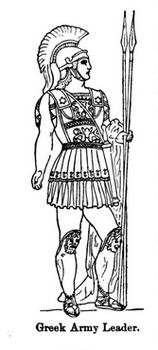 |
Copyright 2008 - 2026 G. Rudolf